
Water Treatment Services
WaterCare Solutions is the UK's Dependable Water Treatment Company
It is hard to escape the fact that, whatever line of business we are in – from a small office unit to a large global blue-chip company – we all use water during our working day. Here at WaterCare Solutions, we provide a wide variety of high-quality water treatment solutions that help with Legionella control, industrial and commercial waters, air hygiene, and cost-effective energy efficiency.
Our professional environmental and engineering specialists bring comprehensive and unparalleled knowledge to any project we undertake in water treatment technologies.
Our Team of Professionals
West Midlands Based
30 Years of Experience
High Quality Work
Our Range of Water Treatment Services
Water Quality Evaluation and Care
Our professional, highly-trained consultants can survey and carry out a site water services risk assessment on your water systems to comply with the current legislation HSG274 and ACOP L8 Rev 4 before offering a managed program to control site-specific risks and issues.
WaterCare Solutions has a bespoke selection of high-performance chemical products specifically designed to:


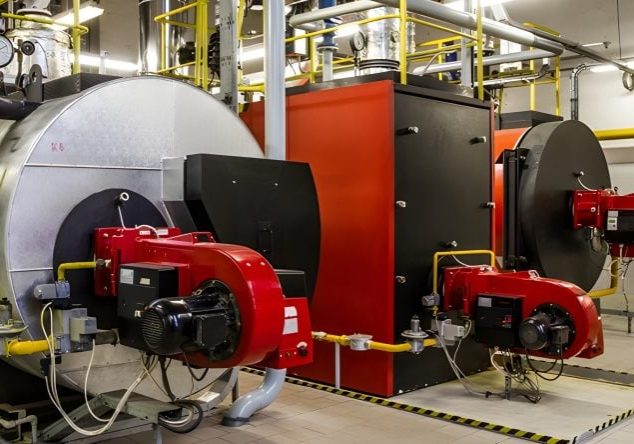
Boiler water systems
Boiler feed treatment systems are used to protect boiler unit components and piping from damage from things present in the boiler and makeup feed. The components present can be dissolved solids, suspended solids, and inorganic material such as copper, iron, calcium, magnesium etc. Without the correct treatment, boiler feed water can cause scaling, corrosion and fouling of the boiler equipment. In turn, this can cause costly plant downtime, consistent and expensive maintenance costs, and increased fuel consumption. In some cases, even boiler failure.
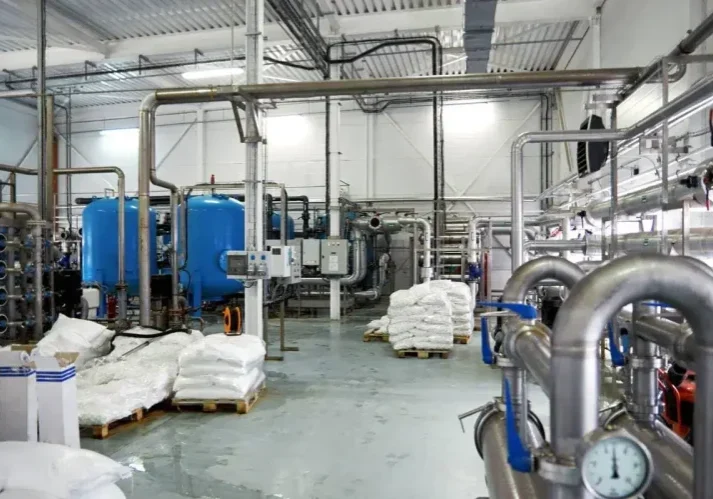
These systems work by removing harmful impurities before entering the boiler, while also controlling the acidity and conductivity of the water. These systems work to filter, soften, de-alkalize, polish, and distribute the water. The processes are extensive and can vary from system to system.
A well-managed boiler water treatment system will:
Cooling tower system
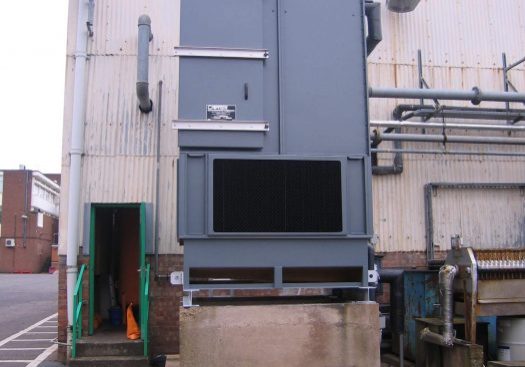
Cooling water treatment systems are used to protect cooling tower components from damage due to contaminants present in feed water, circulation water, and/or blowdown water. These contaminants may include chlorides, hardness, iron, etc. Untreated cooling water can cause issues such as corrosion, biological growth, scaling, and fouling of cooling equipment. This can lead to several issues such as reduced productivity, excessive maintenance, and equipment replacement costs.
The process of treatment used in these systems usually consists of filtration, softening, side-stream filtration and chemical additions.
A well-managed cooling system water treatment programme will:
Closed circuit water treatment system
A closed-circuit system, also called a closed loop system is a pipework design that enables water to circulate for either heating or cooling purposes in domestic, industrial, and communal purposes. The design is manufactured to retain the same water in a system for an indefinite period. Over time the water will degrade and so will the system. Regular closed system water treatment and management works to prolong the life and increase efficiency of all plant machinery/distribution circulation.
Closed circuit system water treatment solutions include:
Professional Legionella Control:
Legionella is mostly found in water and multiplies where temperatures are between 20°C – 45°C and the correct nutrients are available – usually, the bacteria lay dormant when the temp is below 20°C but can’t survive when the temperature exceeds 60°C.
Watercare Solutions provides comprehensive Legionella Risk Assessment Services and are delivered by our team of experienced experts, we use these risk assessments to ensure that the disease is managed to meet the standards set by the UK’s regulatory body.

Industrial Wastewater treatment:
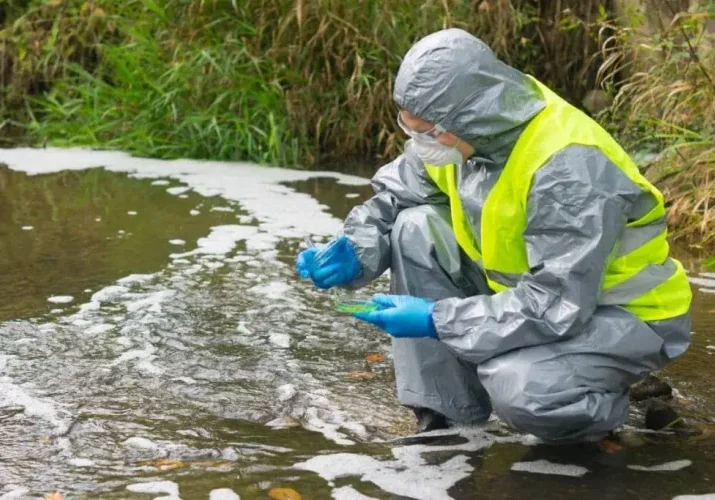
The industrial wastewater treatment process includes removing the organic and inorganic contaminants from effluent generated by industrial sites. The water that has been treated can be released to other areas including into the environment, sewer, or reused in plant processes across the nation.
Why:
How:
Industrial effluents are diverse in any industry they contain different types and amounts of contamination – this is why our services must be diverse and adapt to every single scenario. Watercare Solutions offer a range of wastewater treatment service that fit with all major industries including automotive, mining, food & beverage, pharmaceutical, and many more.
Effluent / Wastewater treatment techniques
Coagulation/ flocculation
This is where liquid aluminium sulphate is added to raw or untreated water. The result causes dirt particles in the water to coagulate or stick together. After, the dirt particles attach, forming larger particles (flocs) that can easily be removed through settling or filtration.
Sedimentation
Here, water moves slowly, causing heavy floc particles to settle on the bottom. Accumulated floc lives on the bottom, eventually becoming sludge, which is eventually carried on to drying lagoons.
Filtration
Filtration, as the name suggests, is where the water is filtered to take particles away from the water. These filters are composed of sand and gravel. Filtration ensures that impurities that float on water gather together.
Disinfection
Before water goes into the distribution system, it is disinfected to get rid of dangerous bacteria, parasites, and viruses. Chlorine is very effective for this.
Sludge drying
Solids gathered during the sedimentation process are transferred to drying lagoons.
pH correction
To adjust pH levels, filtered water is combined with lime. This works to stabilise naturally soft water in order to minimise corrosion.
The Problems Water Treatment Manages
Bacteria growth
Bacteria growth is a big issue and can quickly get out of hand if not dealt with correctly. To correct this, water treatment systems can filter the water to dispose of bacteria, and in some cases add chemicals to treat the water in order to kill bacteria and breakdown biofilm.
Corrosion
Corrosion can cause drinking water to appear unpalatable, off-colour and in some cases unsafe. As corrosion is natural, corrosion inhibitors are added to water treatment to prolong the life of plant and piping throughout the water distribution systems, as well as reducing the risk associated with Legionella.
Scaling
Scaling, also referred to as the hardness of the water, is a combination of calcium and magnesium compounds that have precipitated out of water. Scale can decrease the life of systems and incur maintenance costs. As such, scaling is treated by removal at the source with chemical scale inhibitors to prevent deposition or, in the worst case, removal by acid cleaning.
Microbiological activity
Microbial activity is unwanted in cooling water, closed water and domestic water systems etc but microbes are also essential in wastewater treatment. They are responsible for the removal of pollutants and pathogens, recovery of nutrients and energy, and producing clean water.

The Benefits of effluent / industrial waste water treatment
Ongoing water treatment recommendations
Get in touch today for more information regarding water treatment and ongoing treatment processes. We will also provide a treatment plan as standard with recommendations of ongoing treatment processes.
Why Choose WaterCare For Your Water Treatment Services
WaterCare Solutions is a West Midlands-based water treatment company with over 30 years of experience. Our team is dedicated to helping commercial and industrial sectors keep their water systems healthy with quality water treatment to handle Legionella control, to stay energy efficient and compliant with current legislation.
Our team is fully professional and qualified to carry out the water hygiene treatment you require.
Our Testimonials

We are a company specialising in water audits and leak detection and we are often asked about Legionella and Risk Assessments by our client. Having met and assessed WaterCare Solutions we were happy to put them forward to a client managing a large industrial estate, who was unaware as to their level of non-compliance in respect of the A.C.O.P L8 (Rev4) & HSG274 Part 2.
Following a risk assessment of the unoccupied units and a very successful training session, the client is now compliant and understands their responsibilities. We have furthered our relationship with the client and are pleased to recommend WaterCare Solutions whenever we get an enquiry.
As a buyer I need to be confident that when I place an order with a service provider it delivers both value for money and great service. Having used Mark for 30 years now, and never been let down, it was an easy decision to support him at WaterCare Solutions. They continue to deliver, providing peace of mind that our water systems are in great hands.
Mark and now WaterCare Solutions have looked after our water tube boilers for most of their 34 years life and despite them having a predicted 25-year lifespan they are still going strong. A fitting testimony to the great water treatment they have received over the years.
With our pre-treatment plant and ultra-pure turbine water injection system also in safe hands you need look no further for a complete chemical and service package for your plant.
Highly recommend.
Switching water treatment companies was not a decision we made lightly, however, I am pleased to say Mark and the team at WaterCare Solutions exceeded our expectations. Not only was the transition seamless but we now realise we should have made the move much sooner. We finally have the confidence that our water systems are fully compliant. Don’t be afraid to change and don’t put up with second rate, there are quality companies out there and WaterCare Solutions are one of them.
Looking forward to a long successful partnership.
We were looking for a new equipment package for our cooling tower, but after having look at several manufacturers online we were confused as to what to go with. WaterCare Solutions discussed the pros and cons of several different options and costs with us and feel we now have the best fit for our process. A great install and commissioning too; unit is working well and we could not be more pleased.

Get a FREE quote today
"*" indicates required fields